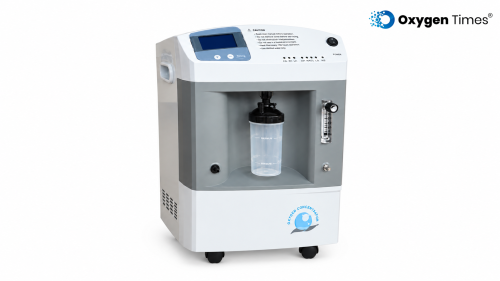
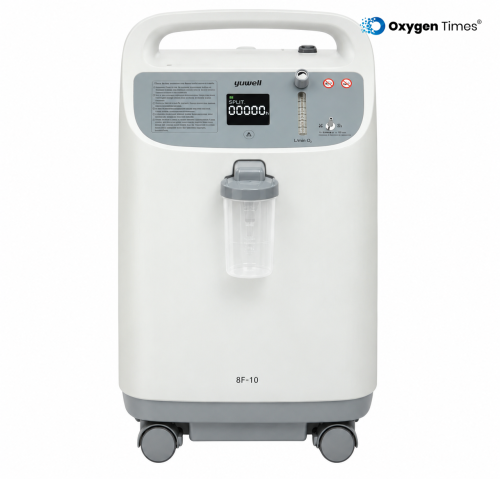
Philips 10 LPM
- 93% ± 3%%
- 1-10LPM
- 1-10LPM
Nidek Nuvo 10 LPM
- 87-95%
- 2-10LPM
- 600watts
Philips 10 LPM and Dr Diaz 10 LPM are both 10 LPM High Flow Stationary Oxygen Concentrators with purity 93% ± 3% %. However, they differ in areas such as Purity, Flow Range, Flow Adjustment Increment and 24x7 Live Purity Display.
Below is a detailed comparison of Philips 10 LPM and Dr Diaz 10 LPM to help you understand their specifications, features, advantages, and key differences.
| Compare | ||
|---|---|---|
| Brand | Philips Respironics | Hemodiaz |
| Rating | ||
| Warranty | - |
 1 year warranty |
| Purity | 93% ± 3% % | 90-95 % |
| Flow Range | 1-10 LPM | — |
| Continuous Flow | 1-10 LPM | 1-10 LPM |
| Flow Adjustment Increment | 1 LPM | — |
| 24x7 Live Purity Display | No | — |
| Floating Ball Flowmeter | Yes | — |
| Single Button Therapy Switch | No | — |
| Weight | 24 kg | 27 kg |
| Sound level | 50 db | 50 db |
| Power consumption | 600 watts | 550 watts |
| Outlet pressure | 30 psi | 20 psi |
| Built-in Nebulizer | No | — |
| Alarms | Power Failure Alarm, Low Oxygen Purity Alarm,System Malfunction Alarm | — |
| Turn-off Timer | No | — |
| Flow Memory After Power Cut | No | — |
| Fire Safety Valve | No | — |
| Oxygen Purity Indicator (OPI) | Yes | No |
| Oxygen Purity % Analyzer | No | No |
| Dimensions | 27H x 19W x 13D inch | 23.6H x 14.7W x 14.3D inch |
| Operating altitude | 2438 feet | — |
| Temperature Range | 32 Celcius | — |
| Warranty | 1 year | — |
| Transportation Humidity | 95 % | — |
| Company Headquarters | USA | India |
| Indian Voltage Model | No | Yes |
| Type | High Flow Stationary | High Flow Stationary |
| What's in the box | Respironics Millennium M10 Stationary Oxygen Concentrator, AC Power Cords, Pre-installed Filter Kit, 5 Nasal Cannulas, User Manual, Step-down Transformer (220V to 110V) | — |
| Literature | ||
| Brochure | Download Brochure | Download Brochure |
| User manual | Philips 10 LPM User Manual | - |
Both Philips 10 LPM and Dr Diaz 10 LPM are listed as High Flow Stationary oxygen concentrators, typically suitable for home and clinical use.
Philips 10 LPM is listed as 1-10 LPM, while Flow range information for Dr Diaz 10 LPM is not mentioned.
Both models provide medical-grade oxygen, with Philips 10 LPM listed at 93% ± 3% % and Dr Diaz 10 LPM listed at 90-95 % across their flow range.
Warranty information for Philips 10 LPM is not mentioned, while Dr Diaz 10 LPM is listed as 1 year warranty.
Philips 10 LPM is headquartered in USA, while Dr Diaz 10 LPM is headquartered in India. Since Dr Diaz 10 LPM is headquartered in India, Indian customers may benefit from a well-established service network.
Philips 10 LPM has an Oxygen Purity Indicator while Dr Diaz 10 LPM lacks this feature. A LED light turns on when purity drops below therapeutic level (typically below 82%).
Neither product has an Oxygen Purity % analyser and lacks this feature. This means none of the machines can display the actual oxygen purity percentage on the screen.
Philips 10 LPM does not have this feature, while information about this feature for Dr Diaz 10 LPM is not mentioned.
Philips 10 LPM does not have this feature, while information about this feature for Dr Diaz 10 LPM is not mentioned.
Philips 10 LPM weighs 24 kg, while Dr Diaz 10 LPM weighs 27 kg. A lighter model is generally easier to move and handle.
Philips 10 LPM measures 27H x 19W x 13D inch, while Dr Diaz 10 LPM measures 23.6H x 14.7W x 14.3D inch.
Philips 10 LPM does not have this feature, while information about this feature for Dr Diaz 10 LPM is not mentioned.
Philips 10 LPM has a floating-ball flowmeter, generally preferred as a gold-standard option and by pulmonologists because it allows micro-level flow adjustment instead of only fixed settings, while information about this feature for Dr Diaz 10 LPM is not mentioned.
Philips 10 LPM does not have this feature, while information about this feature for Dr Diaz 10 LPM is not mentioned.
Philips 10 LPM uses 600 watts, compared with 550 watts used by Dr Diaz 10 LPM.