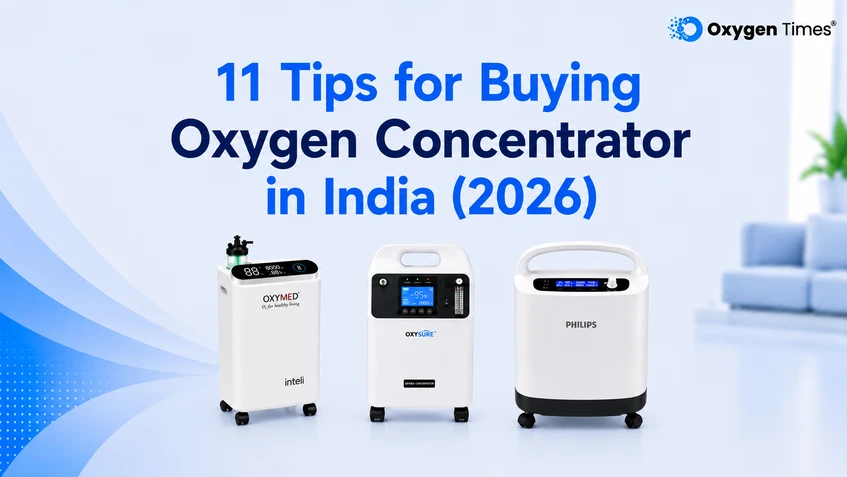
11 Tips to buy Oxygen Concentrator in India (2026)

Choosing an oxygen concentrator in India requires more than comparing prices. Oxygen purity, prescribed flow, warranty, service support, manufacturing date, and long-term maintenance all affect whether a machine is suitable for home use.
In this guide, we cover the key factors to check before buying, including purity monitoring, stationary versus portable models, flow capacity, sieve-bed material, power consumption, noise, weight, warranty, service network, and spare-parts availability.
Key Takeaways:
- Choose a machine that delivers medical-grade oxygen purity and match the machine’s flow capability to the doctor’s prescription.
- Prefer that the machine has an oxygen purity display.
- Keep a flow buffer for possible future requirements.
- Choose between a stationary and portable model based on usage.
- Prefer a clear, easy-to-read floating ball flowmeter.
- Choose Lithium-based (LiX) sieve beds for higher efficiency and longer lifespan.
- Verify the manufacturing date is within 12 months to avoid degraded storage units, and look for a minimum 3-year warranty on 5 LPM models
- Confirm that the brand has a strong service network and spare parts are readily available.
1. Check For 93%+ Oxygen Purity
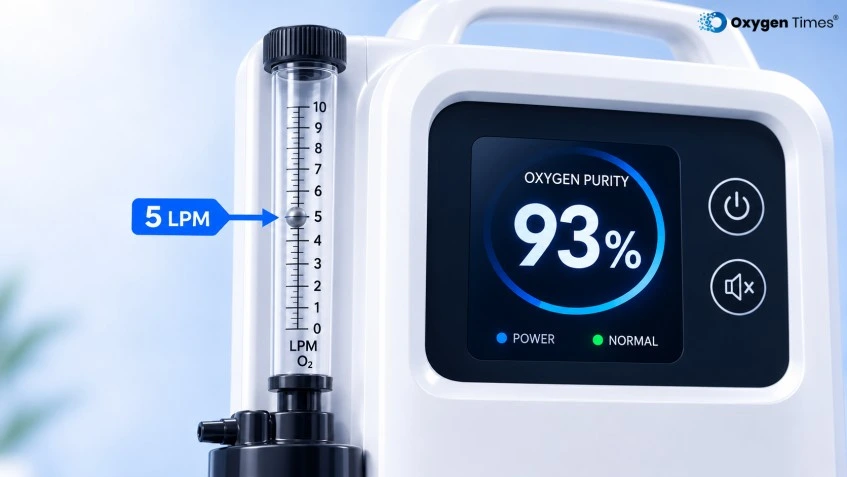
Medical-grade oxygen purity should remain above 93% across the full prescribed flow range, not only at the lowest setting. A claim such as “up to 90% purity” may apply only at 1 LPM, so buyers should verify performance at the flow rate they need.
Some concentrators may show lower purity as the flow increases. Therefore, check independent test results or manufacturer specifications for the complete rated flow range instead of relying only on the highest advertised percentage.
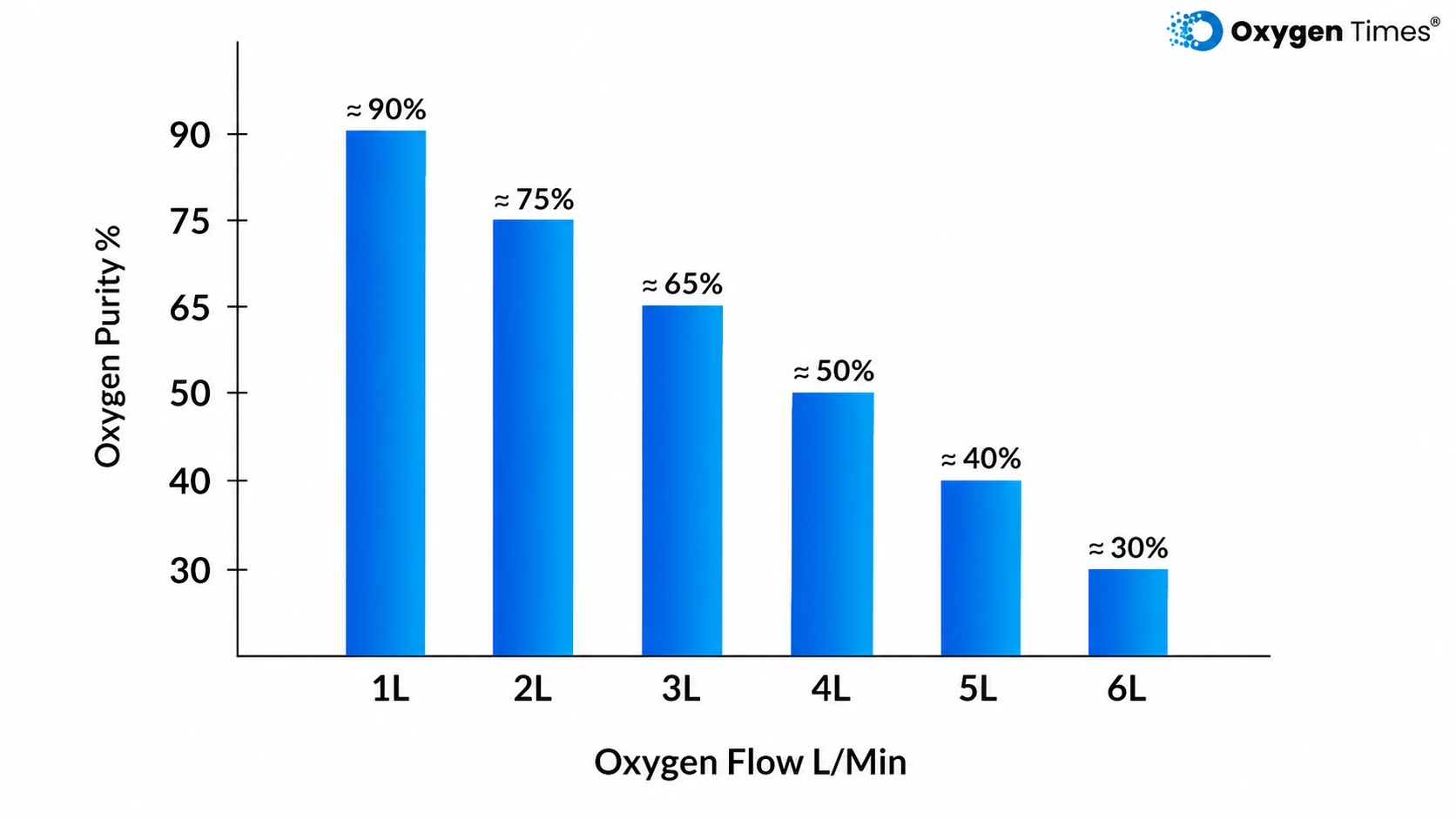
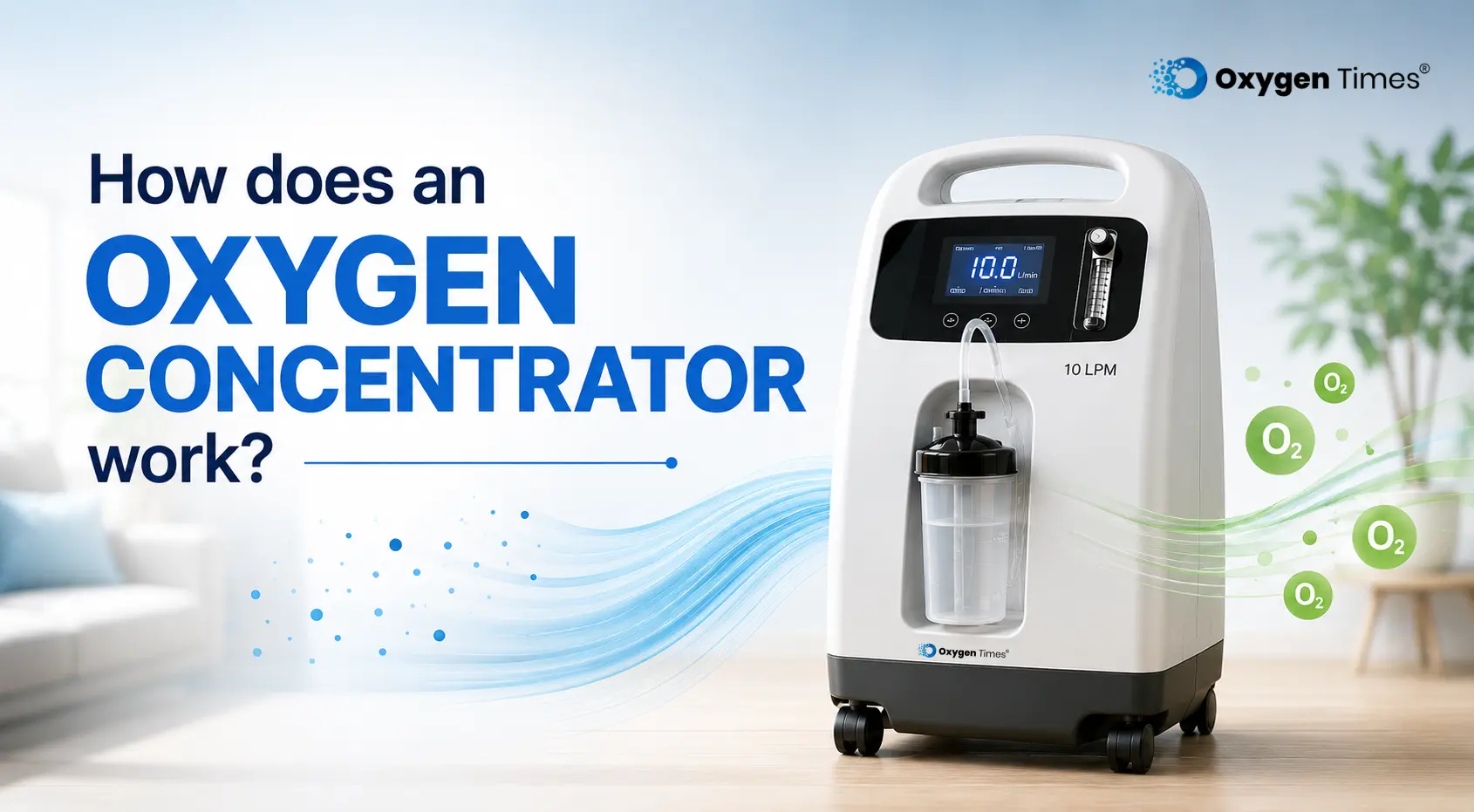
If the machine has a floating-ball flowmeter, the ball moves as the flow knob is adjusted, helping users confirm the selected LPM setting. The flow should always be set according to the doctor’s prescription.
2. Choose a Machine With a Digital Purity Display
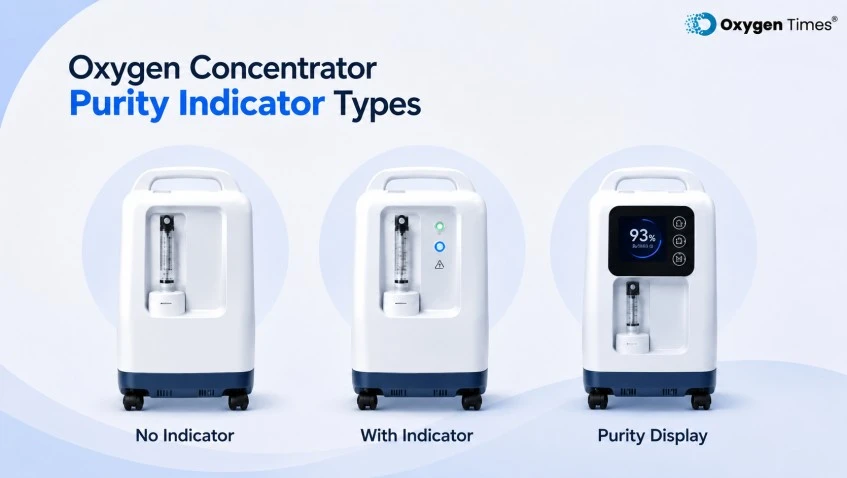
Oxygen concentrators generally monitor output quality in three ways, depending on the model. Basic units may have no oxygen-purity warning, while others use indicator lights or alarms when purity falls below a set limit. Some models include a digital display showing the machine’s displayed oxygen-purity percentage.
Over time, factors such as humidity, dust, and filter or sieve-bed contamination can affect concentrator performance. A model with no purity indicator gives users less immediate information about whether the machine is maintaining its expected output.
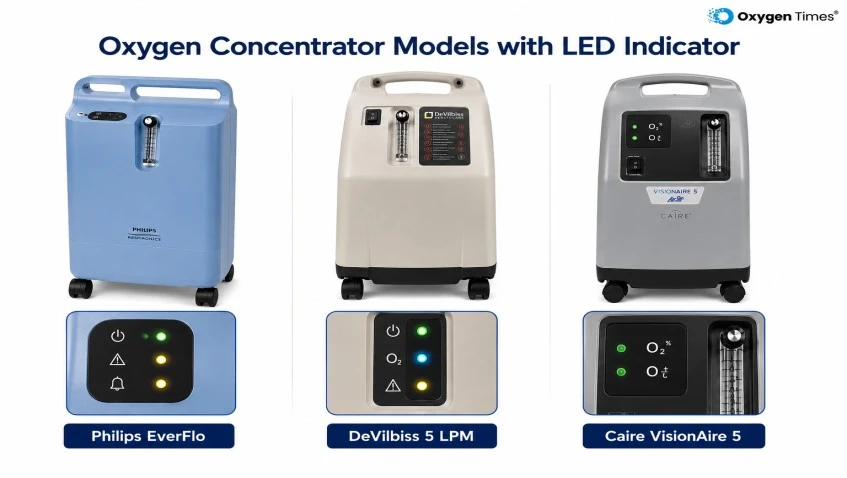
An Oxygen Purity Indicator (OPI) provides a warning when the displayed purity drops, while a digital purity display allows users to monitor the displayed percentage more directly. Buyers should check which monitoring system the model includes and confirm the stated purity specifications before purchase.
| Type | How It Works | Purity Monitoring | Examples |
|---|---|---|---|
|
Without Indicator |
No visibility |
Good |
Generic imports |
|
Oxygen Purity Indicator |
Orange/yellow LED light when purity is low |
Better |
Philips EverFlo, DeVilbiss 5 LPM, Caire VisionAire 5 |
|
Oxygen Purity Display |
Shows exact % (e.g., 91%) |
Best |
Oxymed, Oxysure |
3. Stationary Oxygen Concentrator for Home Use, Portable for Travel
A stationary oxygen concentrator is generally the primary machine for home use, providing a continuous oxygen supply while connected to mains power. It is usually the better choice for patients who need regular or uninterrupted oxygen therapy.
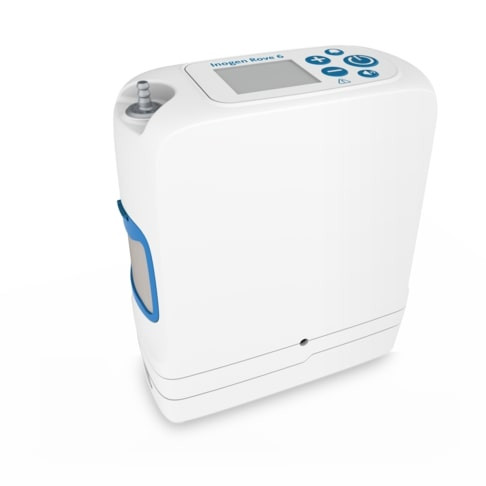
A portable concentrator should be considered as an additional device for travel or outdoor use, not automatically as a replacement for the stationary unit. Portable Oxygen Concentrators (POCs) are best suited for outdoor use, as higher spare-part and operating costs make them less economical for regular home use.
Before adding a portable concentrator, consult your doctor and confirm that its delivery mode and flow settings match the prescribed oxygen requirement. The portable model’s exact specifications should be checked before use.
| Feature | Stationary (5/10 LPM) | Portable Oxygen Concentrator |
|---|---|---|
|
Weight |
12–18 kg |
2–5 kg |
|
Battery |
None (AC only) |
2–10 hrs battery |
|
Best For |
Home use, 24×7 |
Travel, short outings |
If you need reliable, continuous oxygen while resting or at home, a stationary unit is essential. Portable units are suitable for active people who need a lightweight, mobile secondary device for when they are out and about.
4. Choose the Right Flow
Matching your oxygen concentrator strictly to your current prescribed flow rate is a common oversight that can result in surprise costs later on. While a machine that meets your exact needs today might seem sufficient, respiratory requirements can change over time, requiring higher flow rates as guided by your doctor.
We routinely receive calls from families who purchased a unit sized precisely to their initial prescription, only to find themselves forced to buy a second, higher-capacity machine just a few months later when their medical needs expanded.
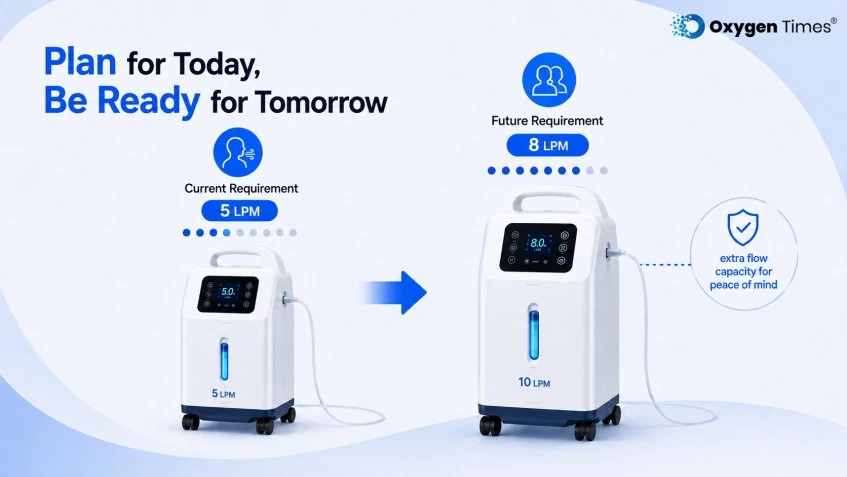
If you are prescribed 4 LPM, consider a 5 LPM oxygen concentrator to provide some additional capacity. Similarly, if your prescription is 7 LPM, a 10 LPM model may offer more room for future requirements and help avoid replacing the machine later.
| Your requirement | Recommended capacity of Oxygen Concentrator |
|---|---|
|
Less than 4 LPM
|
5 LPM machine
|
|
4 - 6.5 LPM
|
8 LPM machine
|
|
6.5 to 10 LPM
|
10 LPM machine
|
5. Always Prefer a Machine with a Floating Ball Flowmeter
A floating-ball flowmeter is widely regarded as the gold standard for checking oxygen flow because users can confirm the LPM setting visually by matching the centre of the ball with the marked scale. It is simple, easy to read, and does not depend on an electronic screen, making it a reliable choice used by healthcare professionals worldwide. 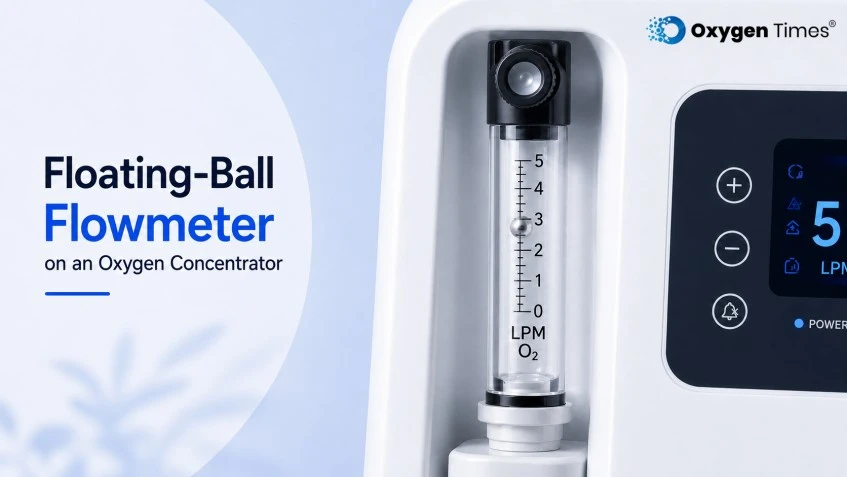
A floating-ball flowmeter uses airflow to lift a small metallic ball inside a marked transparent tube. As the flow changes, the ball moves up or down, allowing users to read the oxygen flow rate in LPM from the scale.
6. Sieve Bed Material: Look for Lithium (LiX)
- Lithium-based LiX sieve beds are more efficient at trapping nitrogen, Lithium sieves offer a nitrogen-to-oxygen selectivity of around 6.0 or higher, approximately twice that of sodium sieves at around 3.0
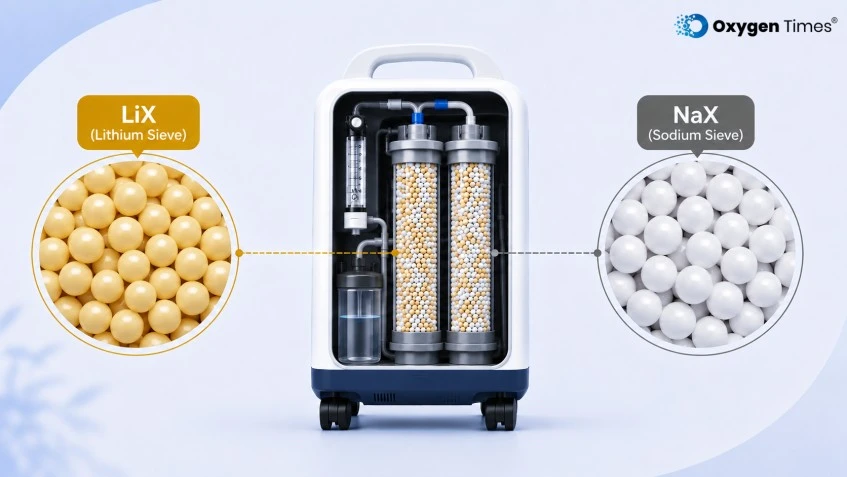
- Size and Portability: Because lithium captures nitrogen more effectively, it can require 30–50% less material by mass to produce the same oxygen volume, making it well suited to decrease the weight of oxygen concentrators.
- Purity at Higher Flow: Lithium sieve beds can maintain 93–96% oxygen purity at higher flow rates, whereas sodium sieve beds may experience purity drops under high or rapid output demands.
Oxysure Home 5L (13.5kg), Oxymed Inteli (15kg), Philips Everflo (14.9kg) & Caire Visionaire 5 (13.6kg) - 100% pure lithium sieve bed is the reason why these models are so lightweight
7. Manufacturing Date Should Be Within 12 Months
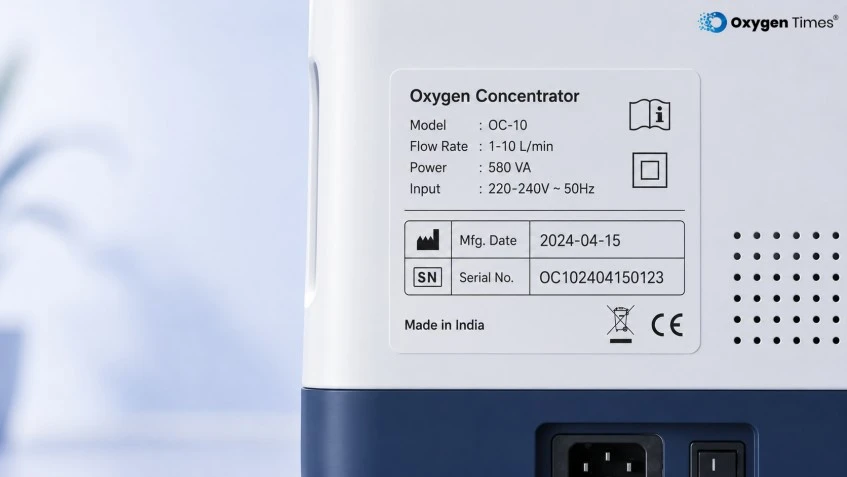
Buying an oxygen concentrator isn't just about price. Old leftover stock from the COVID-19 may have been sitting in warehouses for years, even if it is being sold at a heavy discount.
Always check the manufacturing date on the machine and preferably choose a unit manufactured within the last 12 months. Long storage periods may affect components such as the sieve beds, which are expensive to replace.
A recently manufactured machine means fresher stock and potentially longer usable component life. If the manufacturing label is missing or unclear, consider it a warning sign.
8. Warranty and Service Network Matter More Than Price
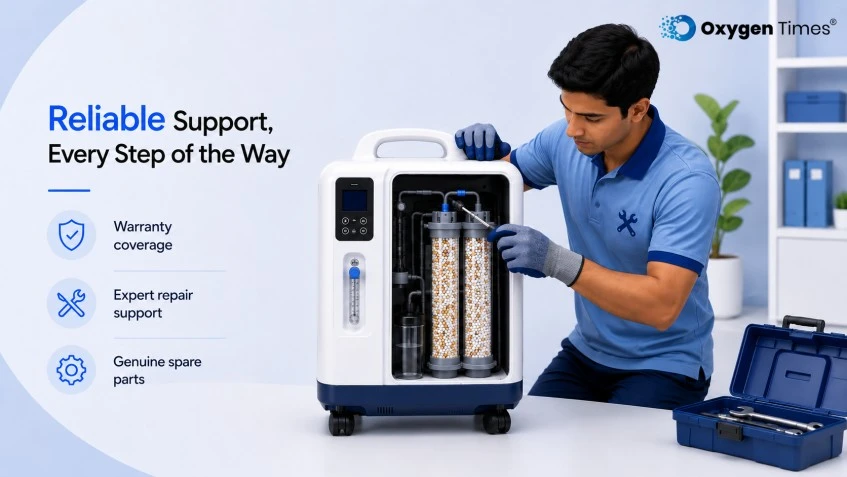
An oxygen concentrator is a long-term medical investment, so warranty and after-sales support matter as much as specifications. Most reputable models in India typically offer a 2–3 year warranty.
Before buying, confirm local service availability, spare parts, warranty terms, and repair turnaround time, as support can vary by location.
Avoid machines with unclear warranties or poor service networks. Always verify the warranty card, service-center details, and spare-parts availability before purchase. Brands such as Oxysure, Oxymed and Philips have widespread service networks across India.
9. Check for a Built-in Nebulizer
A built-in nebulizer can be useful for patients who require nebulized medication along with oxygen therapy. It reduces the need for a separate device and keeps the home setup simpler.
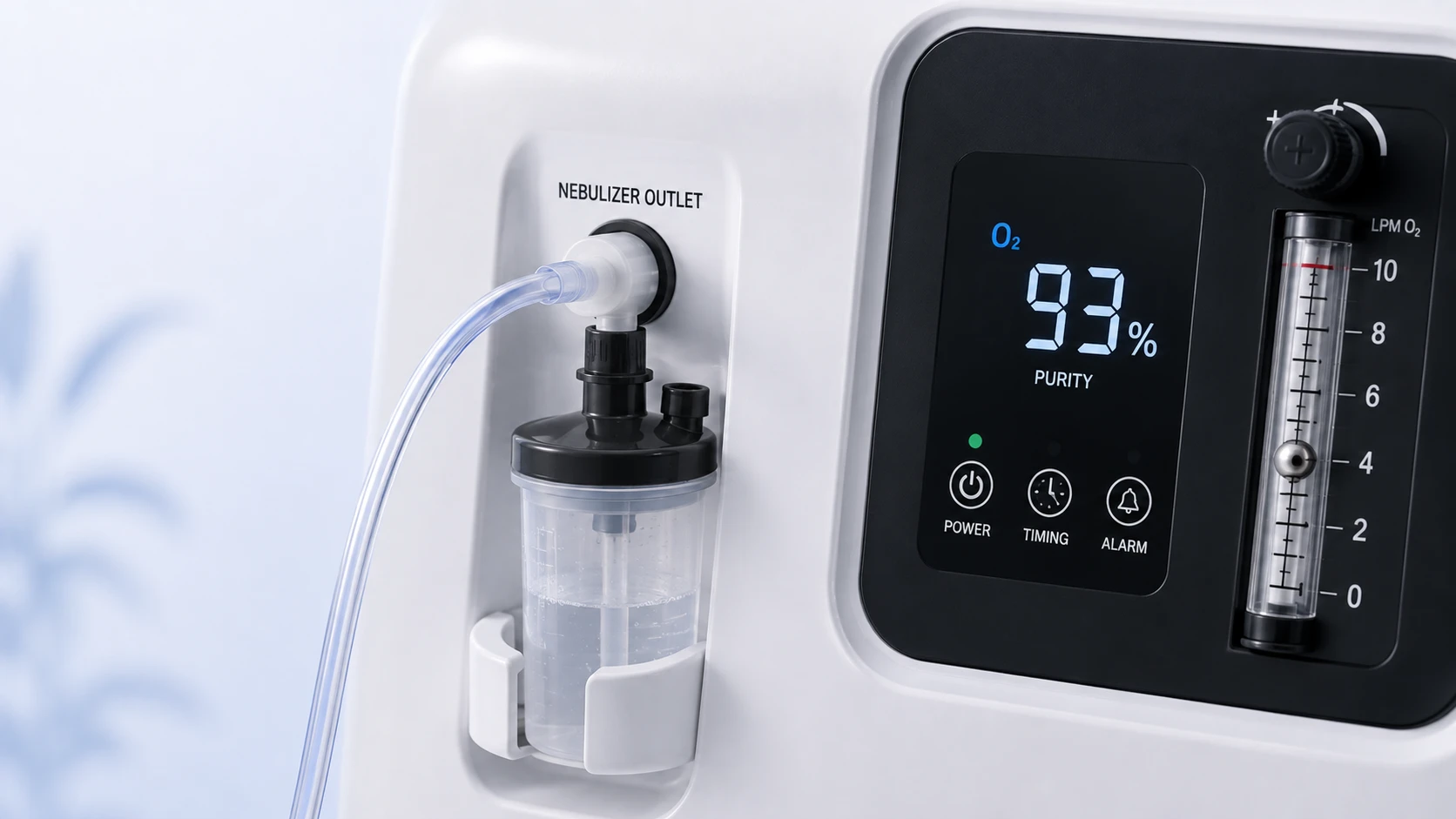
Some oxygen concentrators include an integrated nebulizer, while others do not. Always verify whether the exact model and variant includes this feature before buying.
For patients requiring both therapies, this feature can provide greater convenience, especially for elderly users or those managing multiple medical devices.
10. Avoid Cheap Brands
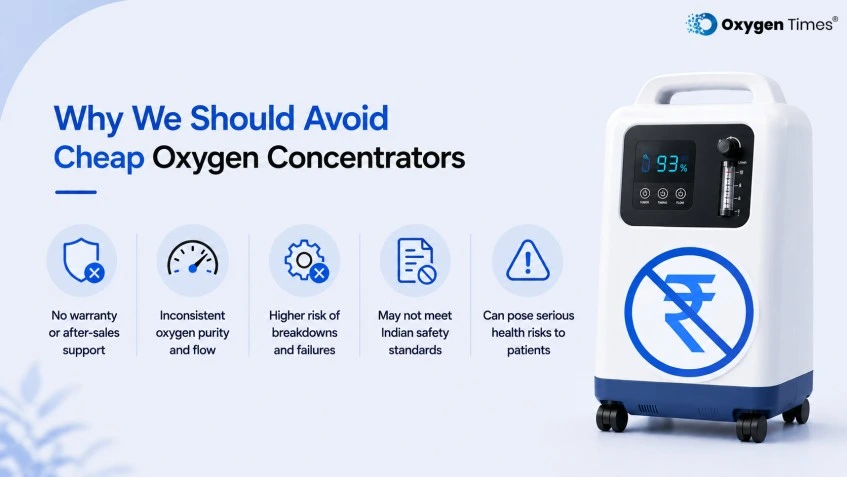
A low purchase price may become expensive if the importer, service network, or spare parts cannot be verified. Red flags include unclear warranty terms, missing service addresses, and unidentifiable importers.
Avoid machines with a missing manufacturing label, unavailable spare parts, or incomplete documentation. These issues can make the concentrator difficult or even impossible to service later.
A cheap machine can ultimately cost more if replacement parts are unavailable and you are forced to buy a new concentrator.
11. Consider Weight if You'll Move It Frequently
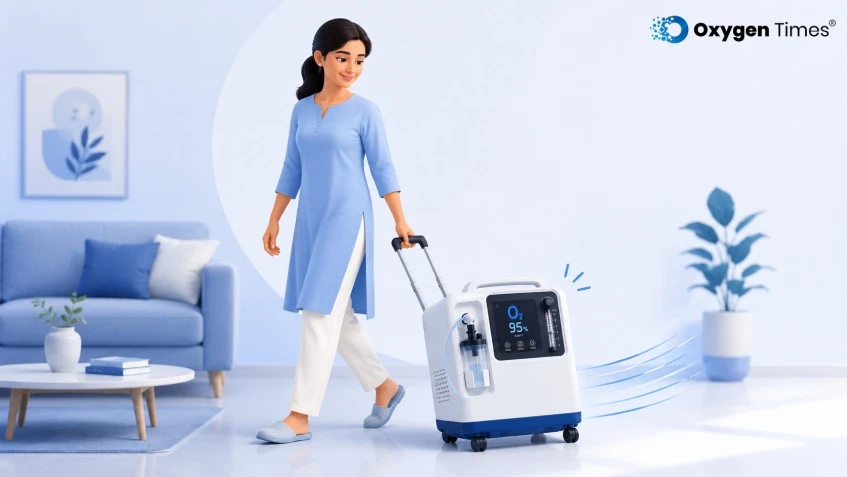
Weight matters more than you think, especially for elderly caregivers or those who need frequent repositioning of the device.
Under 15 kg is generally easier to move around the home without strain. For typical home use, 12–15 kg is perfectly fine since most stationary models come with wheels included.
If you'll be moving the concentrator between rooms daily, look for models under 14 kg with a sturdy handle or trolley, especially if an elderly family member is doing the moving.
Conclusion
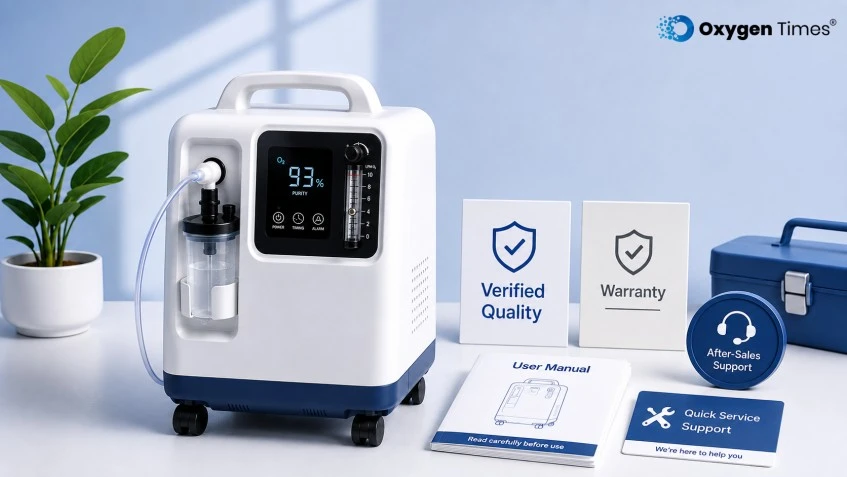
The true value of an oxygen concentrator lies in safety, reliability, and long-term support, not just the upfront discount. Make sure it meets your prescribed flow requirement, maintains therapeutic oxygen purity, and provides the right delivery mode for your needs.
Also check for a clear warranty, reliable local service, and long-term spare-parts availability. These basic checks can help ensure safe and dependable oxygen therapy while protecting your investment.
FAQs
What should I check before buying an oxygen concentrator in India?
Before buying an oxygen concentrator in India, check the machine’s oxygen purity, prescribed LPM flow rate, purity monitoring system, flowmeter, sieve bed material, manufacturing date, warranty, service network, spare-parts availability, noise level, power requirements, and weight.
How do I choose the right LPM oxygen concentrator?
Start with your doctor’s prescribed oxygen flow rate. Choose a concentrator that can deliver the required LPM continuously and discuss whether you need additional flow capacity for future requirements with your doctor. A small flow buffer can provide flexibility if your oxygen needs change under medical guidance.
What oxygen purity should an oxygen concentrator maintain?
The machine should maintain medical-grade oxygen purity across the prescribed flow range, not just at its lowest setting. The article recommends verifying that oxygen purity stays above 90% at all prescribed flow rates and checking how the machine performs across its full rated capacity.
Is an oxygen purity display important in a concentrator?
Yes. A digital oxygen purity display allows you to see the oxygen concentration in real time, while an OPI (Oxygen Purity Indicator) provides a warning when purity drops. Machines without any purity indicator provide less visibility into changes in oxygen output quality.
Should I buy a stationary or portable oxygen concentrator?
The choice depends on the patient’s prescription and intended use. Stationary oxygen concentrators are generally designed for continuous home use, while portable oxygen concentrators commonly use pulse-dose delivery and are intended for mobility. A portable model should only be selected when its delivery method is appropriate for the patient.
Is a 5 LPM oxygen concentrator enough?
A 5 LPM oxygen concentrator can be suitable when it meets the patient’s prescribed continuous-flow requirement. However, the required capacity should be based on the doctor’s prescription. You can also ask your doctor whether choosing a machine with additional flow capacity would be useful if your oxygen requirement changes.
What type of sieve bed is best for an oxygen concentrator?
The article recommends looking for lithium-based (LiX) sieve beds. They are described as offering higher efficiency, lower power consumption, and a longer operating life compared with Li-NaX sieve beds. Buyers should ask the seller which sieve bed material is used in the specific machine.
How old should an oxygen concentrator be when I buy it?
Check the manufacturing date before purchasing. The article recommends choosing a machine manufactured within 12 months of the purchase date. Older warehouse stock may have been stored for long periods, so buyers should verify the manufacturing label rather than relying only on the seller’s assurance.
How important are warranty and after-sales service when buying an oxygen concentrator?
Warranty and after-sales service are important because an oxygen concentrator is a long-term medical device that may require servicing and replacement parts. Before buying, verify the written warranty, local service availability, spare-parts supply, and expected repair time for the specific model.
How can I avoid buying a low-quality or grey-market oxygen concentrator?
Check whether the importer and seller can be verified, the machine has a clear manufacturing label, the warranty is provided in writing, and spare parts and authorised service are available. Be cautious if the seller cannot provide documentation, a physical service address, purity information, or reliable long-term support.
Need help choosing the best Oxygen Concentrator?
Our oxygen therapy experts are here to help you find the perfect match for your needs.
Need help choosing the best Oxygen Concentrator?
Our oxygen therapy experts are here to help you find the perfect match for your needs.